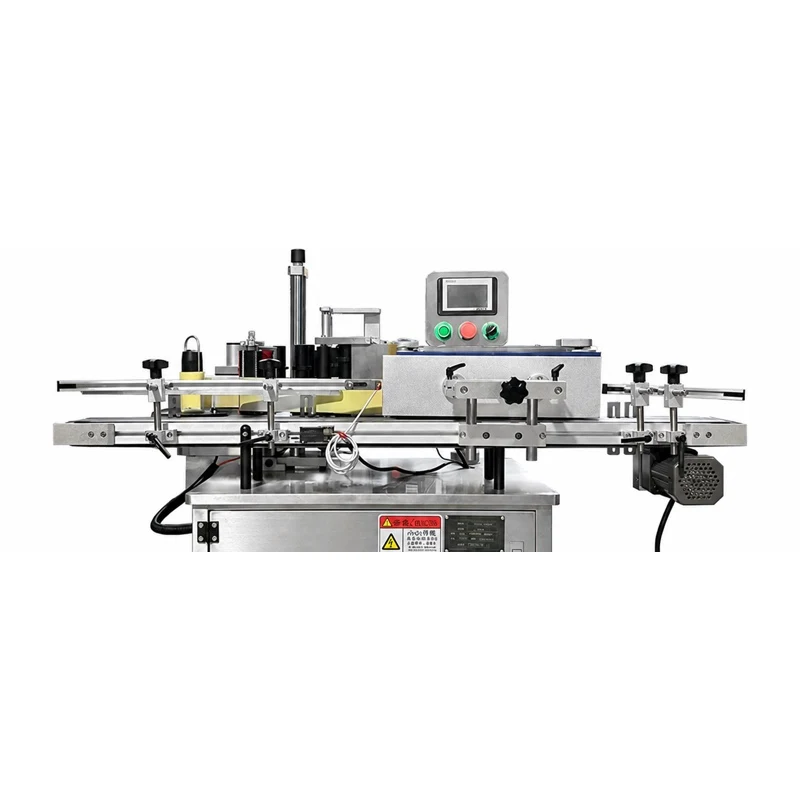
Selecting a Jar Labeling Machine: Wide-Mouth Container Mechanics {#wrap-vs-front-back-jars}
Wide-mouth glass and plastic jars for pasta sauces, honey, fruit preserves, nut butters, spices, pickled vegetables, and cosmetic creams behave very differently on a conveyor than tall beverage bottles, and applying standard bottle settings causes label wrinkling, mold-seam air bubbles, and costly line downtime. Jars have a low height-to-diameter ratio, prominent closure lugs or continuous-thread (CT) caps that often exceed the body diameter, deeper glass mold parting seams, and frequent requirements for two-stage decoration (combining a body label with a top lid medallion, an L-clip tamper-evident strip, or a perforated neck shrink band). Within our industrial labeling machines engineering taxonomy and our parent bottle labeling machines hub, specifying a jar labeling machine starts by choosing between wrap-around and front-and-back body application, then pairing the right top or neck sealing station.
Wrap-Around vs. Front-and-Back Jar Labeling Performance
On straight-sided cylindrical jars (such as 16 oz / 24 oz mason-style pasta sauce jars, cylindrical peanut butter jars, and round cosmetic tubs), a wrap-around pressure-sensitive labeler spins the container against a motorized side belt and sponge backing pad. Wrap-around labeling covers 95% to 100% of the jar circumference using a single continuous web, giving graphic designers maximum contiguous space for branding, nutrition facts, ingredient lists, and GS1 barcodes. Single-head linear wrap systems run up to 100 labels per minute (scaling to 200 to 500+ jars per minute on multi-head or rotary platforms) with ±1.0 mm placement accuracy and 15 to 20 minute format setup times.
When a jar has an oval, rectangular, square, or hexagonal cross-section (common in artisanal honey, mustard, and premium jam jars), or when a brand wants clear glass visibility between opposing front and back panels, a dual-head front-and-back jar labeler is required. An overhead top hold-down belt and dual-side chain aligner lock the jar along the conveyor centerline while opposing left and right dispensing heads apply the two labels simultaneously. Front-and-back labeling covers 60% to 70% of the jar perimeter at 85 to 90 labels per minute on standard frames (and 100+ JPM with dual servo applicators), holding a tighter ±0.8 mm placement accuracy with 20 to 25 minute changeovers.
| Engineering Metric | Wrap-Around Jar Labeler | Dual-Head Front & Back Jar Labeler | Full-Body / Neck Shrink Sleeve |
|---|---|---|---|
| Circumferential Coverage | 95–100% (single continuous label) | 60–70% (two discrete panels; exposes product) | 100% 360° contour including cap skirt |
| Compatible Jar Shapes | Cylindrical straight-wall round jars | Round, oval, rectangular, square, hexagonal | Cylindrical, severely tapered, contoured, faceted |
| Single-Lane Speed Range | 50–100+ JPM linear (up to 500+ JPM rotary) | 85–120+ JPM linear (up to 300+ JPM servo/rotary) | 100–600 JPM (up to 800 BPM high-speed rotary) |
| Placement Accuracy | ±1.0 mm vertical & lap seam | ±0.8 mm panel registration | ±0.5–1.5 mm cut & shoot placement |
| Typical Changeover Time | 15–20 minutes | 20–25 minutes | 30–60 minutes (mandrel + heat tunnel) |
| Relative Equipment CapEx | Baseline (1.0x single applicator head) | 1.4x–1.7x (dual heads + chain aligner + top belt) | 1.8x–2.5x (sleeve head + steam/hot-air tunnel) |
Managing Sidewall Draft Angles, Recessed Panels & Glass Mold Seams {#taper-draft-and-mold-seams}
Unlike drawn aluminum cans or extruded tubing, blow-molded glass and injection-molded plastic jars rarely have perfectly smooth, vertical cylinders. Two geometric artifacts cause the majority of jar labeling defects: sidewall taper and mold parting seams.
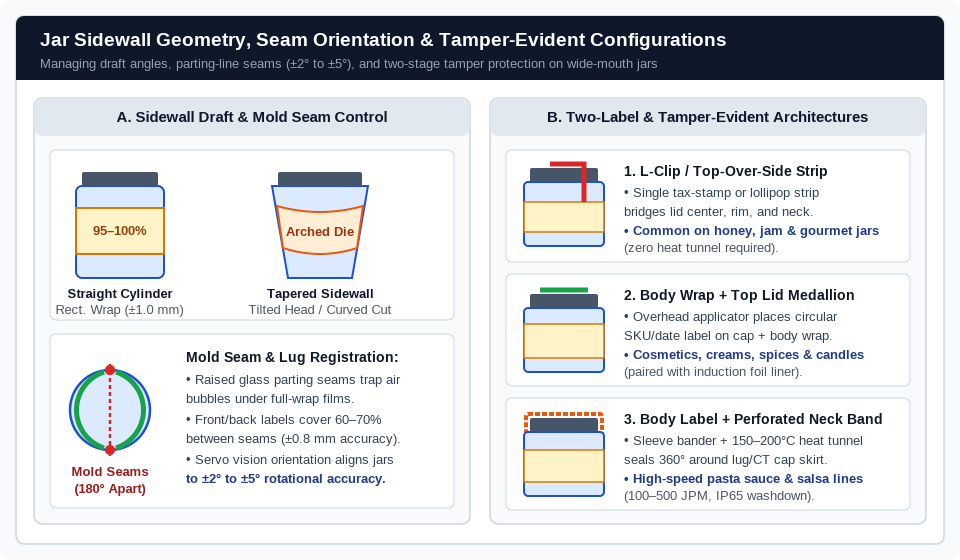
1. Sidewall Taper (Draft Angle) Compensation
Wide-mouth quilted jam jars, yogurt pots, and cosmetic cream jars frequently taper from a wider shoulder to a narrower base (or vice versa) so empty containers release cleanly from blow molds. When a flat rectangular label is wrapped around a frustum cone whose draft angle exceeds 1.0° to 1.5°, the top edge of the label travels a longer circumferential path than the bottom edge, forcing the trailing tail to angle upward and buckle into diagonal wrinkles.
Engineers resolve jar taper across three severity tiers:
- For mild tapers under 1.0°, tilting the peel plate on a calibrated pitch-and-roll trunnion mount and using a compliant dual-durometer foam wrap belt allows a standard film label to absorb the slight path difference.
- For moderate tapers between 1.0° and 3.5°, the label converter die-cuts the label in an arched curve (“banana label”) calculated from the jar’s upper and lower radii, while the applicator dispenses the arched web onto the tilted sidewall.
- For steep or compound tapers, full-body shrink sleeve labeling machines using 40 to 70 micron PETG film (up to 78% shrink ratio) eliminate adhesive geometry constraints entirely.
2. Glass Mold Seams, Embossing, and ±2° to ±5° Rotational Orientation
Glass jars are formed in two-part molds that leave two vertical parting-line seams 180 degrees apart, often accompanied by glassmaker heel knurling or shoulder embossing (such as a bee emblem on a honey jar or a brand crest on a pasta sauce jar). If a full-wrap BOPP or paper label bridges directly over a proud mold seam, air pockets form beside the ridge; if a three-roller indexer rolls over a heavy seam, the sudden radius bump can shift overlap registration.
Automated jar packaging lines address mold seams in two ways:
- Specifying glass jars with a recessed label panel (inset 0.5 mm to 1.0 mm between the shoulder and heel bumper rings) where the mold seam is polished flush inside the label zone, protecting the applied label from jar-to-jar scuffing during case packing.
- Installing a servo rotational orientation module upstream of a dual-head front-and-back or three-roller labeler. Using optical seam sensors or 360-degree machine vision cameras, servo spin rollers rotate each jar to ±2° to ±5° rotational accuracy before locking it under the top hold-down belt, ensuring front and back labels land centered between the mold seams and aligned with shoulder embossing.
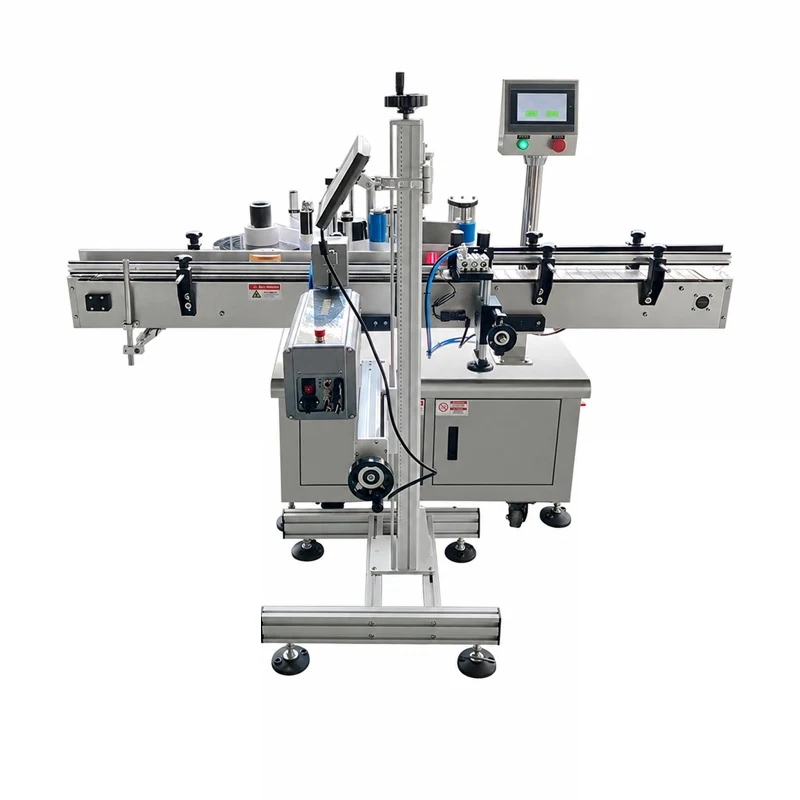
Two-Label & Tamper-Evident Jar Configurations {#two-label-tamper-configurations}
Because wide-mouth jars can be opened and reclosed easily by hand, retail food chains and regulatory frameworks require visible tamper evidence alongside primary body branding. Depending on container style and line speed, jar labeling machines are built in three multi-label architectures:
1. Body Wrap + L-Clip (Top-Over-Side) Tamper-Evident Strip
Common on honey, jam, artisanal preserves, caviar, and specialty condiment jars, this two-head linear machine applies a primary wrap-around or front/back label first, while an overhead applicator dispenses a narrow L-clip (or longer C-wrap / lollipop tax-stamp strip) onto the top center of the metal lug cap. As the jar advances under a contoured overhead sponge roller and vertical wipe-down finger, the trailing tail of the strip is ironed over the 90-degree cap rim and down onto the glass neck. Unscrewing the lid shears the paper or frangible film strip immediately, providing mechanical tamper protection without the floor space or energy draw of a heat tunnel.
2. Body Wrap + Top Lid Medallion (Paired with Induction Foil Sealing)
Cosmetic creams, hair masks, nut butters, spices, and dry supplement jars using plastic continuous-thread caps frequently pair a top-surface pressure-sensitive applicator with a wrap-around body labeler. The overhead peel plate applies a circular die-cut medallion (carrying shade, scent, or promotional copy) centered within ±1.0 mm on the flat cap lid, while tamper evidence and hermetic barrier protection are handled internally by an upstream electromagnetic induction sealer (operating at up to 60 m/min conveyor speed with 1 to 6 kW power to bond an aluminum foil liner to the jar rim in ~200 milliseconds). Some gourmet lines also add a bottom-up applicator mounted beneath a split-belt hugger conveyor to place a barcode, batch/lot code, or allergen sticker on the jar base.
3. Body Label + Perforated Neck Shrink Band (150°C to 200°C Tunnel)
High-speed retail pasta sauce, salsa, baby food, and pickle lines running 100 to 500 jars per minute typically separate body decoration from tamper banding. After the jar receives its pressure-sensitive or roll-fed body label, an inline tamper-evident neck band applicator shoots a short perforated PVC or PETG sleeve band around the cap skirt and upper neck, shrinking it tightly inside a compact 150°C to 200°C electric hot-air or steam tunnel. When OTC medicinal ointments or regulated health products are packaged in jars, the tamper-evident barrier and accompanying label statement must satisfy 21 CFR § 211.132.
Hot-Fill Washdown Construction & Full-Line Integration {#jar-line-integration-washdown}
In an automated jar packaging line, the labeler sits downstream of a volumetric piston or net-weight filler, a chuck or spindle capper (applying 5 to 50 in-lbs of torque at 50 to 400+ JPM) or steam-vacuum lug capper, an induction sealer or pasteurizer/cooler tunnel, and an air-knife blow-off dryer.
Because sauces, jams, and pickled brines are frequently hot-filled at 82°C to 90°C and rinsed with warm water after capping to remove spilled sugar or oil from the jar threads, the jar labeling machine must withstand heat, humidity, and aggressive sanitation:
- Specify 304 or 316 stainless steel frames with sloped top covers, sanitary leveling feet, and IP65 ingress protection on servo motors, VFDs, and PLC cabinets so daily washdown sprays do not corrode electronics.
- Size 2 to 5 minutes of rotary table or bi-directional mass accumulation between the cooling tunnel discharge and the labeler infeed. As noted in our bottle labeling machine hub, typical lines run at 60% to 75% OEE (70% to 85% effective throughput); accumulation buffering allows the operator to swap a 300 mm OD label roll without stopping the hot-fill filler or overcooking product in the pasteurizer.
- Select adhesive grades matched to the jar’s infeed surface state: standard permanent acrylic (-20°C to +80°C) for dry warm jars exiting a blower dryer, wet-strength acrylic for cool jars with residual moisture, or high-tack rubber/modified acrylic when labeling low-surface-energy HDPE or polypropylene cosmetic jars (<38 dynes/cm).
FDA 21 CFR § 101.2 Information Panel Rules for Food Jars {#regulatory-panel-compliance}
When designing wrap-around, front-and-back, or top-lid labels for food jars sold in the United States, artwork dimensions and applicator head placement must comply with FDA 21 CFR § 101.2:
- The Information Panel (carrying Nutrition Facts, ingredient list, allergen declaration, and manufacturer/packer name and address) must be positioned immediately contiguous and to the right of the Principal Display Panel (PDP) as viewed by the consumer, with mandatory text printed in a minimum type height of 1/16 inch (1.6 mm) based on the lowercase letter “o”.
- On jars with a separate lid and body where the lid serves as part of the Principal Display Panel, mandatory Information Panel statements may appear on the side body panel rather than crowding the cap lid, provided the required elements remain grouped together without intervening non-mandatory marketing copy.
- When ordering roll labels from your converter, verify whether the PDP or the Information Panel must lead off the peel plate first by checking your machine’s left-to-right or right-to-left container flow against our label roll unwind direction chart (#1 to #8).
Sample-Trial & Seam-Registration Verification on Jar Lines {#fat-verification}
Before shipping a jar labeling machine or signing off on Factory Acceptance Testing (FAT), run filled and capped sample jars through four container-specific verification checks to eliminate post-installation wrinkling and cap-clearance faults:
- Overhang Cap & Lug-Skirt Top-Belt Clearance Check: On wide-mouth mason, honey, and salsa jars where the metal twist-off lug cap or plastic continuous-thread lid overhangs the glass shoulder diameter, verify that the overhead top hold-down belt and side chain guides clear the cap skirt without pinching the label’s upper border against the neck ring.
- Sidewall Taper & Banana-Die-Cut Fit Verification: Measure upper and lower label-zone diameters across 20 sample jars from multiple mold cavities, calculate the exact draft angle using our container label size and coverage calculator, and verify whether a standard trunnion head-tilt adjustment (<1.0° taper) or an arched banana-cut die profile (1.0° to 3.5° taper) is required to hold ±0.8 mm to ±1.0 mm baseline registration.
- Parting-Line Seam Orientation & Air-Channel Inspection: On non-recessed or embossed glass jars, run a 100-jar continuous burst through the servo rotational orientation module to verify that optical seam sensors lock the container within ±2° to ±5° so front and back panels land cleanly between the two 180-degree mold seams with zero trapped air channels.
- L-Clip Tear-Strip & Post-Pasteurizer Adhesion Test: On two-label tamper-evident jar lines, test L-clip or C-wrap wipe-down rollers across the 90-degree cap edge and verify wet-strength acrylic adhesion on warm, post-cooler jars exiting the air-knife dryer.
Comparing rigid food and chemical container lines? Review our complete labeling machine RFQ checklist, explore our water and beverage bottle labeler guide, can and tin labeling machine guide, and front-and-back bottle labeling guide, and message LINEVO engineers on WhatsApp with your jar samples and label drawings to receive a complete turnkey proposal.
Frequently Asked Questions {#faq}
Should a glass sauce or honey jar use a wrap-around labeler or a front-and-back labeler?
Straight-walled cylindrical jars with recessed label panels run fastest and most economically on a wrap-around labeler, covering 95% to 100% of the circumference at up to 100 labels per minute per head with ±1.0 mm accuracy and 15 to 20 minute setup times. Square, hexagonal, oval, or heavy-seam glass jars require a dual-head front-and-back labeler, which covers 60% to 70% of the perimeter between mold seams at 85 to 100+ JPM with ±0.8 mm accuracy.
How do jar labeling machines prevent air bubbles over raised glass mold parting seams?
Blow-molded glass jars have two vertical parting-line seams located 180 degrees apart. If a full-wrap film or stiff paper label bridges across a raised seam, a vertical air channel forms along the ridge. Jar lines solve this either by specifying jars with a 0.5 to 1.0 mm recessed label panel, or by integrating a servo vision orientation station (±2° to ±5° rotational accuracy) ahead of a front-and-back labeler so both panels land cleanly between the two mold seams.
What is an L-clip or lollipop tamper-evident jar label?
An L-clip (or C-wrap / lollipop) tamper seal is a single pressure-sensitive paper or destructible film strip applied across the top center of the jar lid, wiped down over the cap skirt, and pressed onto the upper glass shoulder. Any attempt to twist off the lug or continuous-thread lid tears the paper strip, providing visible tamper evidence on honey, jam, and gourmet food jars without requiring a heat shrink tunnel.
How are jar labeling machines protected on hot-fill pasta sauce and salsa lines?
Hot-fill food jars (filled at 82°C to 90°C, capped under steam vacuum, and passed through a pasteurizer/cooler tunnel) enter the labeling zone warm and damp, while the surrounding plant undergoes daily caustic washdowns. Industrial jar labelers for these lines use 304 or 316 stainless steel frames, IP65 sealed servo enclosures, sloped drip trays, upstream air-knife dryers, and 2 to 5 minutes of accumulation buffering.
Related Guides & Specifications
Container Label Size, Wrap Coverage, and Shrink Sleeve Layflat Calculator
Calculate bottle label circumference, partial wrap arc, shrink sleeve layflat width, film shrink percentage, and tapered jar chord distortion for RFQs.
Learn moreWater Bottle Labeling Machines: PET Wrap-Around, Roll-Fed BOPP, and Shrink Sleeve
Compare pressure-sensitive wrap, roll-fed BOPP hot-melt, and shrink sleeve water bottle labelers for thin-wall PET, sparkling water, and glass lines.
Learn moreWine and Beer Bottle Labeling Machines: Taper, 3-Roller & Wet-Glass Guide
Select wine and beer bottle labeling machines for Bordeaux and Burgundy glass, 3-roller front/back/neck registration, cold brite-tank condensation, and capsules.
Learn moreCan and Tin Labeling Machines: Chime Clearance, Wall Dent Prevention & Format Selection
Select can and tin labeling machines for 12/16 oz aluminum beverage cans, steel food tins, and aerosols across wrap PS, shrink sleeve, and hot-melt.
Learn moreRelated Equipment & Guides
Automatic Labeling Machines: How to Choose by Container, Label and Speed
Choose an automatic labeling machine by container shape, label type and speed. Compare labeler types, accuracy tiers and the checks to run on your samples.
Learn moreWrap-Around and Pressure-Sensitive Labeling Machines: Web Kinematics & Line Selection
Engineering guide to wrap-around and pressure-sensitive labeling machines: web tension, peel plate geometry, wrap belt vs 3-roller kinematics, and line selection.
Learn moreShrink Sleeve Labeling Machines: How to Match Applicator, Film and Shrink Tunnel
Specify a shrink sleeve labeling machine by sleeve format, layflat width, film shrink ratio and steam or electric tunnel. Compare speeds and sample test steps.
Learn moreBottle Labeling Machines: How to Choose by Container Material, Shape, and Line Speed
Select a bottle labeling machine by container material (glass, PET, HDPE), shape (round, flat, oval, square, tapered), surface condensation, and line speed.
Learn moreLabel Roll Unwind Direction Chart (#1 to #8) and Roll Length Calculator
Interactive #1 to #8 label winding direction chart (wound out vs wound in), eye-mark guide, and roll length, OD, core size, and shift roll calculator.
Learn moreContainer Label Size, Wrap Coverage, and Shrink Sleeve Layflat Calculator
Calculate bottle label circumference, partial wrap arc, shrink sleeve layflat width, film shrink percentage, and tapered jar chord distortion for RFQs.
Learn moreFront and Back Labeling Machines: Dual-Head Sync & Top Hold-Down Mechanics
Engineering guide to front and back double-side labeling machines: centering chains, overhead top holding belts, dual servo heads, and flat or oval bottle specs.
Learn moreTamper-Evident Neck Band Applicator: Overhang Geometry, Perforation & Line Integration
Specify automatic tamper-evident shrink neck band applicators for jars and bottles: cap overhang rules, vertical/T-perforation blades, and 21 CFR 211.132 compliance.
Learn moreWater Bottle Labeling Machines: PET Wrap-Around, Roll-Fed BOPP, and Shrink Sleeve
Compare pressure-sensitive wrap, roll-fed BOPP hot-melt, and shrink sleeve water bottle labelers for thin-wall PET, sparkling water, and glass lines.
Learn moreCan and Tin Labeling Machines: Chime Clearance, Wall Dent Prevention & Format Selection
Select can and tin labeling machines for 12/16 oz aluminum beverage cans, steel food tins, and aerosols across wrap PS, shrink sleeve, and hot-melt.
Learn more