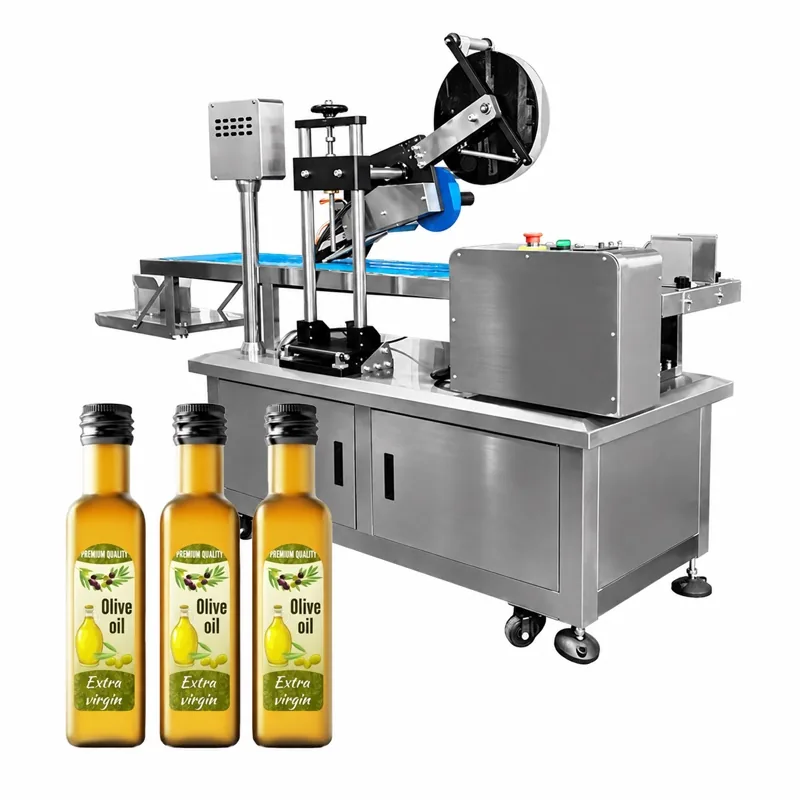
Qualifying an industrial labeling machine manufacturer is an engineering verification process that tests mechanical rigidity, closed-loop servo control, electrical documentation, and physical container handling before a purchase order or shipment release is signed. Selecting an unqualified supplier based on brochure speed ratings or lowest headline price causes chronic web breaks, placement drift, and costly post-delivery rework on the plant floor.
Two machines that look identical in a catalog rendering often behave completely differently after six months of two-shift operation. Across the core categories of industrial labeling machines, long-term placement accuracy and uptime depend on how the manufacturer machines its peel plates and drive rollers, whether the applicator head uses closed-loop servo feedback or open-loop stepper motors, and whether the factory tests the assembled machine on the buyer’s actual containers and label rolls during a formal Factory Acceptance Test (FAT).
Comparing supplier tiers: factory OEM vs regional distributor vs turnkey integrator
Before issuing a Request for Quotation (RFQ), packaging engineers and procurement teams need to match their internal engineering resources to the right supplier structure. An industrial labeling machine supplier typically operates under one of three commercial models, each carrying distinct trade-offs in custom engineering depth, lead time, and price markup.
| Supplier Model | Primary Engineering Scope | Best-Fit Buyer Profile | Key Risk & Audit Focus |
|---|---|---|---|
| Direct Labeling Equipment Manufacturer (Factory OEM) | Designs, machines, wires, and tests standalone labelers and multi-station frames in-house; builds custom timing screws, starwheels, and peel plates to sample containers | Plants with in-house maintenance or project engineers buying 1–5 machines, multi-SKU bottle/vial lines, or custom container tooling without distributor markups | Verify English electrical schematics, brand-name PLC/servo component availability in your region, and air-shipped spare parts response time |
| Regional Stocking Distributor / Reseller | Imports or stocks standard catalog configurations (usually round-bottle wrap or tabletop semi-automatics) for local delivery and basic field service | Buyers needing an off-the-shelf unit in <2 weeks for a standard cylindrical jar or box with zero custom mechanical modifications | Limited ability to re-engineer peel plates, timing worms, or PLC handshakes; high markups on custom change parts ordered back through the factory |
| Turnkey Packaging Line Integrator | Combines third-party or OEM fillers, cappers, conveyors, accumulation tables, labelers, and case packers under a single master contract and SAT | Multi-machine greenfield lines requiring single-point project management across filling, capping, labeling, and end-of-line packaging | Integrator may treat the labeler as a commodity sub-component; buyers must still audit the underlying labeling OEM’s head mechanics and FAT performance |
| Specialized Vertical OEM Platform (e.g., LINEVO) | Combines direct factory catalog breadth (21 labeling configurations across wrap, front/back, vial, sleeve, and print-apply) with broader filling/packaging line integration | Engineering buyers who want direct factory pricing and custom sample testing plus coordinated upstream/downstream custom labeling line integration | Requires physical container drawings, label unwind specs, and sample shipments upfront to lock formal quotation and FAT acceptance criteria |
Stage 1: Pre-quotation sample evaluation and URS traceability
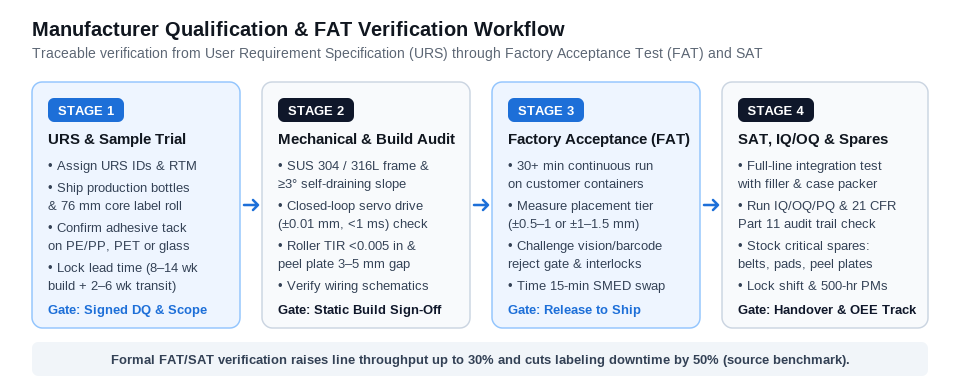
A credible labeling equipment manufacturer will not issue a binding performance guarantee from a generic email inquiry that states only “200 BPM bottle labeler.” Because container wall stiffness, surface energy, mold seams, and label liner release force dictate applicator geometry, the qualification process starts with how the vendor handles your User Requirement Specification (URS) and physical samples.
How a qualified OEM evaluates your containers and label rolls
When you submit a labeling machine RFQ checklist to a prospective custom labeling machine OEM, evaluate their engineering intake against these four practices:
- Requirement ID and Traceability Matrix (RTM) discipline: In regulated pharmaceutical, medical device, food, and high-speed consumer goods projects, every functional requirement in the URS receives a unique identifier (such as URS-PER-003 for placement accuracy or URS-INT-004 for line handshakes). A qualified manufacturer maps each URS ID into a Design Qualification (DQ) response and a Requirements Traceability Matrix so that every promise is verified during FAT, SAT, Installation Qualification (IQ), and Operational Qualification (OQ).
- Physical container and closure inspection: Before finalizing guide rail, top hold-down belt, or starwheel drawings, the manufacturer should inspect real production containers with closures torqued in place. For thin-walled PET water bottles, the OEM evaluates whether containers require internal pressure or gentle twin-belt side gripping to prevent ovalization during wrap-down. For tapered glass jars, the engineering team measures the exact cone angle so the applicator head tilts on a matching compound bracket.
- Label roll and unwind verification: The vendor checks your roll core inner diameter (75 to 76 mm / 3 inches industrial standard), maximum outer roll diameter (300 mm standard), minimum inter-label gap (≥3 mm), and label roll unwind direction (#1 to #8). If your artwork runs on transparent BOPP film or metallized foil, the manufacturer specifies a capacitive or ultrasonic gap sensor upfront rather than shipping a standard optical fork sensor that fails during commissioning.
- Realistic derating of nameplate speed: Honest manufacturers never quote a machine to run at 100% of its mechanical ceiling. Because real production output runs at 70% to 90% of rated nameplate speed depending on container geometry, adhesive tack, and operator roll splicing, a qualified OEM sizes the machine so your sustained target CPM sits at 80% to 85% of the machine’s rated capacity.
Use the web-speed and derating equations below to audit whether a vendor’s quoted applicator head can physically sustain your line rate:
v_web (m/min) = ((L_label + L_gap) × CPM_surge) / 1000
CPM_rated_min = CPM_target / 0.80
Worked qualification example: Suppose your line runs a 140 mm wrap-around label with a 4 mm gap (L_label + L_gap = 144 mm) at a sustained target rate of CPM_target = 200 BPM, and your accumulation recovery requires a surge rate of CPM_surge = 240 BPM:
- Minimum required nameplate speed: CPM_rated_min = 200 / 0.80 = 250 BPM. Any supplier quoting a machine with a 200 BPM nameplate ceiling is under-sizing the frame by 20%.
- Required web dispensing velocity at surge: v_web = (144 × 240) / 1000 = 34.56 m/min. During your vendor audit, require the manufacturer to prove continuous servo dispensing at 35 to 40 m/min without step loss or liner breakage.
Stage 2: Mechanical and electrical build audit
Once proposals are on the table, engineering buyers must look past sheet-metal covers and audit the mechanical, pneumatic, and electrical sub-assemblies that determine whether the machine holds tolerance after 10 million cycles.
| Sub-Assembly / System | Low-Grade Build (High Downtime Risk) | Qualified Industrial OEM Standard | How to Audit Before Shipment |
|---|---|---|---|
| Labeling Head Drive | Open-loop stepper motor (±0.1–0.3 mm precision, 5–10 ms response); misses steps under heavy roll inertia or rapid speed ramps | Closed-loop brushless servo drive (±0.01 mm precision, <1 ms response, 0.1 ms feedback loop) synchronized to conveyor shaft encoder | Check motor/drive part numbers in electrical BOM; run a 50%–100% conveyor speed ramp test during FAT and measure label drift |
| Frame & Washdown Metallurgy | Thin painted carbon steel or spot-welded sheet metal with flat horizontal ledges that trap washdown water and product spills | Heavy TIG-welded SUS 304 stainless steel frame (or SUS 316L in corrosive/pharma zones), ≥3° self-draining sloped surfaces, Ra ≤0.4–0.8 µm polish | Request material mill certificates (MTRs) for 304/316L contact parts; inspect weld seams and check cabinet IP65 ingress protection rating |
| Peel Plate & Rollers | Stamped sheet-metal peel bar that flexes under web tension; unground aluminum rollers with >0.015 in runout | Hardened, precision-ground peel plate adjusted 3–5 mm from container wall; knurled/silicone drive and nip rollers with TIR <0.005 in (0.127 mm) | Measure roller concentricity with a dial indicator; inspect peel edge radius and rigidity under full web tension |
| Container Orientation & Grip | Fixed brackets adjusted with Allen wrenches and unmarked slots; single-belt side contact that lets flat bottles twist >3° | Digital position indicators, tool-free handwheels, color-coded SMED starwheels/guides, and synchronized top hold-down belt keeping skew <2° | Time a complete SKU changeover during FAT against a 15-minute SMED target |
| Electrical Cabinet & PLC | Unlabeled wires, proprietary microcontroller board with locked firmware, no terminal strip drawings | IEC/UL-organized panel with ferrules and wire numbers on every conductor, standard PLC/HMI (Siemens, Allen-Bradley, Mitsubishi, Omron), full schematics | Open the electrical enclosure during static audit; trace three random field sensors back to the terminal block using the supplied PDF schematic |
Auditing servo vs stepper applicator drives
The single largest technical divide between an entry-level machine builder and a production-grade wrap-around and pressure-sensitive labeler manufacturer is the applicator drive architecture. Open-loop stepper motors command angular steps without verifying rotor position; as adhesive residue builds up on the peel plate or as a 300 mm label roll transitions from full inertia to empty core, a stepper drive lags by 5 to 10 ms and drifts to ±0.1 to 0.3 mm internal error (which magnifies to ±2 to 3 mm on a moving bottle).
A qualified manufacturer equips primary labeling heads with closed-loop servo drives that sample encoder feedback every 0.1 ms, respond to velocity changes in under 1 ms, and hold internal web registration to ±0.01 mm. On multi-SKU lines, closed-loop servos also store digital label-length, offset, and acceleration profiles in HMI memory, cutting changeover adjustments from 60 minutes of manual trial-and-error to 15 minutes.
Auditing sanitary construction and GMP compliance
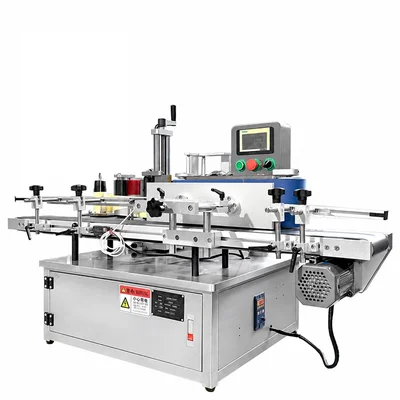
For food, beverage, nutraceutical, cosmetic, and pharmaceutical plants, frame geometry directly impacts sanitation labor and microbiological safety. Verify that the manufacturer fabricates frames from SUS 304 stainless steel as standard and offers SUS 316L stainless steel for saline, acidic, or sterile washdown environments. Horizontal surfaces on GMP frames should incorporate a ≥3° slope so cleaning solutions drain completely without pooling, and product-zone surfaces should be polished to Ra ≤0.4 to 0.8 µm with zero exposed screw threads. Where high-pressure washdown is required, verify IP65-rated electrical enclosures and sealed bearing housings.
Stage 3: Factory Acceptance Test (FAT) protocol and pass/fail criteria
Never authorize final payment or crating of an industrial labeling machine on the basis of a 30-second video clip showing empty water bottles passing through the frame. Published integration benchmarks demonstrate that executing a structured Factory Acceptance Test (FAT) at the manufacturer’s facility (or via live multi-camera witnessed video with serialized sample measurement) followed by a Site Acceptance Test (SAT) increases effective line throughput by up to 30% and cuts labeling-related downtime by 50%.
Sample shipment rules for a valid FAT
At least three weeks before the scheduled FAT date, ship the manufacturer:
- Production containers and closures: Enough filled or weight-simulated, capped containers to run continuous trials plus changeover and fault-challenge tests (typically 300 to 1,000+ containers per SKU, recyclable across test loops if un-labeled, plus sacrifice containers for live adhesion runs).
- Production label rolls: At least 2 to 4 full production rolls per SKU wound on the exact 75 to 76 mm (3 in) core and ≤300 mm OD specified in the URS, using the actual facestock, adhesive, and release liner that will run in your plant.
Five mandatory FAT test protocols
Structure your factory acceptance test labeling machine document around five measurable pass/fail gates:
- Static verification (pre-power-on): Verify machine overall footprint (for example, 2280 × 1500 × 1500 mm on a standard twin-head front/back frame), conveyor top-of-chain height (830 to 875 mm or custom line elevation), power supply rating (220V single-phase or 380V/480V 3-phase, 50/60 Hz), pneumatic air regulator and filter-dryer installation, and wire-number agreement against the as-built electrical schematic.
- Sustained speed and placement accuracy run (30+ minutes continuous): Run the machine continuously at the contracted target CPM and surge CPM. Pull 50 consecutive labeled containers at the start, middle, and end of the run and measure vertical height and horizontal wrap overlap or front-to-back centering with calibrated digital calipers:
- Ultra-precision tier (pharma vials, small cosmetics): must hold ±0.5 to ±1.0 mm with zero bubbles or edge lift.
- High-accuracy tier (retail beverage, personal care, square oil bottles, front/back panels): must hold ±1.0 to ±1.5 mm.
- Standard industrial tier (shipping cartons, utility jugs, high-speed standard wrap): must hold ±2.0 to ±3.0 mm.
- Speed-ramp and micro-stop recovery test: Ramp conveyor VFD speed from 50% to 100% and back down while applying labels, confirming that closed-loop encoder following keeps registration within tolerance. Trigger the downstream backup photoeye 10 times in succession to verify clean automatic pause and restart without missing a container or snapping the release liner.
- Vision, coding, and fault-reject challenge: If the machine includes a thermal transfer overprinter (TTO), laser coder, or vision camera, verify that linear barcodes meet ISO/IEC 15417:2007 (Code 128) and ISO/IEC 15416 quality grades at ≥99.5% read rate. Introduce deliberate challenge defects (a roll section with 5 missing labels, a spliced joint, an uncoded label, a skewed label, and an unreadable barcode) at full speed; require 100% positive rejection into the locked reject bin and verify that the machine halts if the reject confirmation sensor is blocked.
- Tool-free SMED changeover verification: Have a single technician convert the machine from SKU A to SKU B using the supplied change parts, digital counters, and saved HMI servo recipe. Total time from last good bottle of SKU A to first verified bottle of SKU B within ±mm tolerance must meet the contracted target (typically ≤15 minutes).
Stage 4: Lead times, documentation deliverables, and spare-parts provisioning
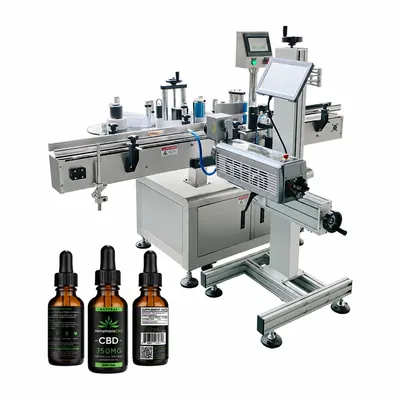
Even a mechanically sound labeler becomes a bottleneck if the manufacturer ships without complete maintenance documentation or takes six weeks to supply a replacement wear belt. Lock commercial, documentation, and spare-parts terms into the purchase contract before releasing the deposit.
Realistic manufacturing and shipping lead times
Industrial labeling machine fabrication and commissioning schedules follow predictable engineering timelines:
- Standard manufacturing and assembly: 8 to 14 weeks from drawing and sample sign-off to FAT readiness.
- Expedited factory build: 5 to 7 weeks when using pre-machined modular frames and standard applicator heads.
- Ocean or air transit and customs: 2 to 6 weeks depending on destination port and incoterms.
- Country-specific regulatory certifications (such as CE third-party testing, UL/CSA panel inspection, or specialized pharma validation packages): add 2 to 4 weeks to the critical path.
Any vendor promising a custom multi-head or rotary machine with machined change parts in 10 days is either shipping a repurposed stock unit without testing your containers or omitting the FAT cycle entirely.
Required technical documentation and validation binders
Require the manufacturer to deliver the following documentation package in both printed binder and searchable digital (PDF/CAD) formats prior to or alongside shipment:
- As-built electrical, pneumatic, and mechanical drawings: Complete point-to-point wiring schematics, pneumatic circuit diagrams, mechanical assembly drawings, and a full Bill of Materials (BOM) listing OEM part numbers for every PLC, servo drive, VFD, photoeye, bearing, and belt.
- PLC and HMI backup files: Unencrypted backup parameters or recipe backup tables so your plant controls engineer can restore a replacement HMI or servo drive if hardware is damaged years later.
- GMP / Pharma validation lifecycle package (when applicable): Design Qualification (DQ), Factory Acceptance Test (FAT) signed report, Site Acceptance Test (SAT) protocol, Installation Qualification (IQ), Operational Qualification (OQ), Performance Qualification (PQ) templates, material certificates for 304/316L stainless and food/pharma-grade polymers, and 21 CFR Part 11 electronic signature and audit-trail verification records.
Critical spare-parts kit and preventive maintenance intervals
Skipping a $500 replacement roller or wear belt can trigger $2,880 in lost production during a single shift if the machine goes down unexpectedly. While reputable manufacturers back their equipment with a 12-month warranty and dispatch emergency air-freighted spare parts within 5 to 7 working days, your plant should never wait a week for routine wear items.
Order a two-year critical wear-parts kit to ship inside the machine crate at purchase, matched to the standard preventive maintenance schedule:
- Every shift / daily: Clean adhesive build-up from the peel plate edge and nip rollers with approved solvent; blow dust off optical and capacitive gap sensors; verify label web tracking.
- Weekly: Inspect sponge wrap belts, top hold-down belts, and timing belts for glazing or fraying; check pneumatic filter-regulator water traps.
- Every 500 operating hours: Check drive and pressure roller concentricity (confirm TIR remains <0.005 in), lubricate linear guide rails and lead screws, and verify servo encoder coupling tightness.
- Annually: Replace high-cycle elastomeric wear items (silicone nip rollers, wrap-station sponge belts, vacuum pads on tamp heads, and teflon peel-edge strips) and recalibrate vision lighting and barcode verifiers.
How LINEVO qualifies and delivers industrial labeling systems
As detailed on our about page, IndustrialLabelingMachine.com operates as LINEVO’s specialized vertical engineering platform for primary, secondary, and end-of-line labeling machinery. Our engineering catalog covers 21 dedicated labeling configurations (family T11) spanning bottle labeling machines, shrink sleeve labeling machines, and label applicators and print-and-apply systems, backed by LINEVO’s 251 configurations across 9 packaging machinery categories for full-line integration.
Every LINEVO labeling project confirms container dimensions, label web specifications, sustained speed headroom, and placement tolerances on your physical samples during technical quotation and Factory Acceptance Testing (FAT). To compare budget ranges before requesting a proposal, review our industrial labeling machine cost guide, walk through the 7-gate how to choose a labeling machine workflow, consult our FAT and troubleshooting manual and label wrinkling, bubbling, and flagging guide, or use our labeling machine RFQ checklist and message our engineering team on WhatsApp.
Common questions
Should I buy directly from a labeling machine manufacturer or through a local distributor?
Buy through a local stocking distributor if you need a single off-the-shelf semi-automatic or basic round-bottle wrap labeler delivered in under two weeks with zero mechanical customization. Buy directly from an industrial labeling machine manufacturer (or a factory-backed line integrator) when your project requires custom container handling parts, high-speed closed-loop servo heads, PLC fieldbus integration, or a witnessed Factory Acceptance Test on your actual containers.
How do I verify whether a manufacturer uses real closed-loop servo drives instead of stepper motors?
Request the electrical Bill of Materials (BOM) and wiring schematic during quotation and verify the exact motor and amplifier model numbers on the label dispensing axis. A true closed-loop servo applicator includes an encoder feedback cable returning from the motor shaft to the servo drive, achieves ±0.01 mm registration with <1 ms response time, and maintains label placement accuracy when conveyor speed is ramped from 50% to 100% during FAT.
How many sample bottles and label rolls do I need to send for a Factory Acceptance Test?
For a thorough FAT covering continuous 30-minute endurance runs, speed-ramp tests, fault-reject challenges, and changeover timing, ship 300 to 1,000 production containers (with closures) and 2 to 4 full production label rolls per SKU wound on 76 mm (3-inch) cores. Ensure the sample containers reflect your real production wall thickness and surface treatment so adhesive tack and wrap belt compression are tested realistically.
What is the typical manufacturing lead time for a custom industrial labeling machine?
Standard factory manufacturing and assembly takes 8 to 14 weeks from approved container drawings and sample receipt, plus 2 to 6 weeks for ocean or air transit. Expedited builds on modular inline frames can be completed in 5 to 7 weeks, while specialized third-party country certifications or full pharmaceutical IQ/OQ validation binders typically add 2 to 4 weeks.
Related Equipment & Guides
Automatic Labeling Machines: How to Choose by Container, Label and Speed
Choose an automatic labeling machine by container shape, label type and speed. Compare labeler types, accuracy tiers and the checks to run on your samples.
Learn moreLabel Applicators & Print-and-Apply Systems: Actuation, Speed & Retrofit Guide
Compare pre-printed label applicators and print-and-apply systems across wipe-on, tamp-blow, air-blow, and corner-wrap actuation, web speed, and retrofits.
Learn moreWrap-Around and Pressure-Sensitive Labeling Machines: Web Kinematics & Line Selection
Engineering guide to wrap-around and pressure-sensitive labeling machines: web tension, peel plate geometry, wrap belt vs 3-roller kinematics, and line selection.
Learn moreShrink Sleeve Labeling Machines: How to Match Applicator, Film and Shrink Tunnel
Specify a shrink sleeve labeling machine by sleeve format, layflat width, film shrink ratio and steam or electric tunnel. Compare speeds and sample test steps.
Learn morePrint and Apply Labeling Systems: Thermal Engines, DPI, and PLC Integration
Select print and apply labeling machines across Zebra, Sato, and Datamax engines, 203 to 600 DPI printheads, EtherNet/IP handshakes, and ISO/IEC 15416 grading.
Learn moreBottle Labeling Machines: How to Choose by Container Material, Shape, and Line Speed
Select a bottle labeling machine by container material (glass, PET, HDPE), shape (round, flat, oval, square, tapered), surface condensation, and line speed.
Learn moreLabel Automation and Custom Packaging Line Labeling Integration
Engineering guide to label automation and inline labeling system integration across fillers, cappers, accumulation tables, PLC sync, and vision reject gates.
Learn moreIndustrial Labeling Machine FAT Checklist, Maintenance, and Troubleshooting Manual
Execute a 30-minute Factory Acceptance Test (FAT), follow a 6-tier preventive maintenance schedule, and resolve 12 common labeling machine defects.
Learn moreFront and Back Labeling Machines: Dual-Head Sync & Top Hold-Down Mechanics
Engineering guide to front and back double-side labeling machines: centering chains, overhead top holding belts, dual servo heads, and flat or oval bottle specs.
Learn moreRotary vs. Inline Labeling Machines: Turret Kinematics, Speed & Changeover
Compare rotary carousel turret vs inline linear labeling machines across speed ratings (50-150 vs 150-600+ BPM), bottle plates, starwheel changeover, and layout.
Learn moreIndustrial Labeling Machine Price and Total Cost of Ownership Guide
Transparent industrial labeling machine price breakdown from $2,000 semi-automatics to $500,000+ high-speed lines, plus hidden TCO drivers and payback math.
Learn moreHow to Choose an Industrial Labeling Machine: 7-Gate Selection Guide
Step-by-step labeling machine buying guide: 7 engineering gates from container geometry, surface energy, and unwind #1-#8 to speed headroom and line utilities.
Learn moreHow to Fix Label Wrinkling, Bubbling, Flagging, and Axial Skew
Engineering troubleshooting guide to fix pressure-sensitive label wrinkling, air bubbling, edge flagging, and axial skew across bottle and carton labelers.
Learn moreLabeling Machine RFQ Checklist and User Requirement Specification (URS)
Engineering labeling machine RFQ checklist and User Requirement Specification (URS) template covering container drawings, roll unwind #1-#8, CPM, and FAT rules.
Learn moreAbout IndustrialLabelingMachine.com: LINEVO's Labeling Equipment Platform
How IndustrialLabelingMachine.com, a specialized LINEVO vertical platform, helps packaging engineers specify, test and quote automatic labeling systems.
Learn more