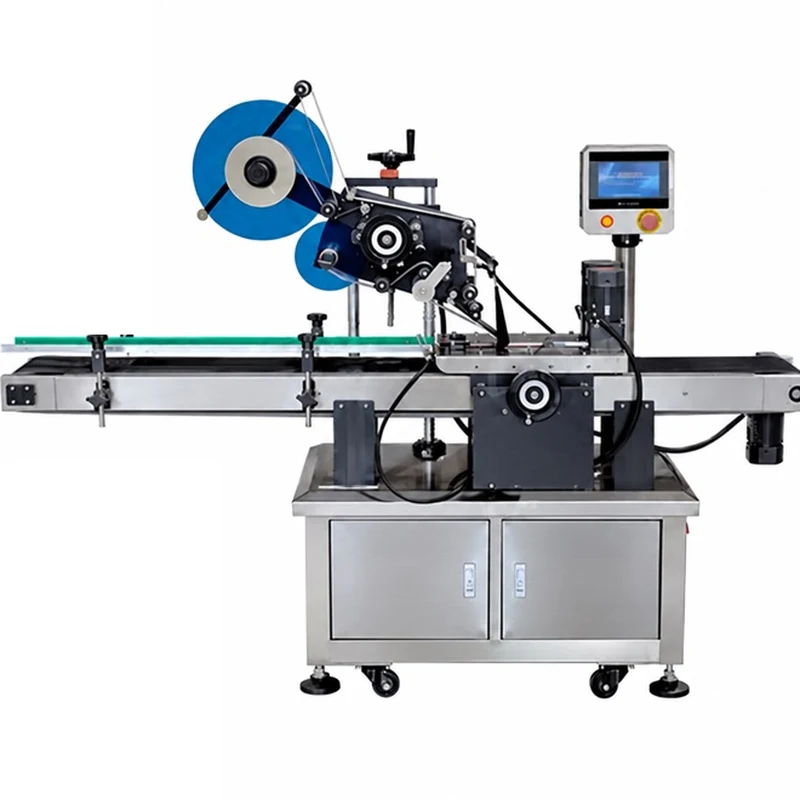
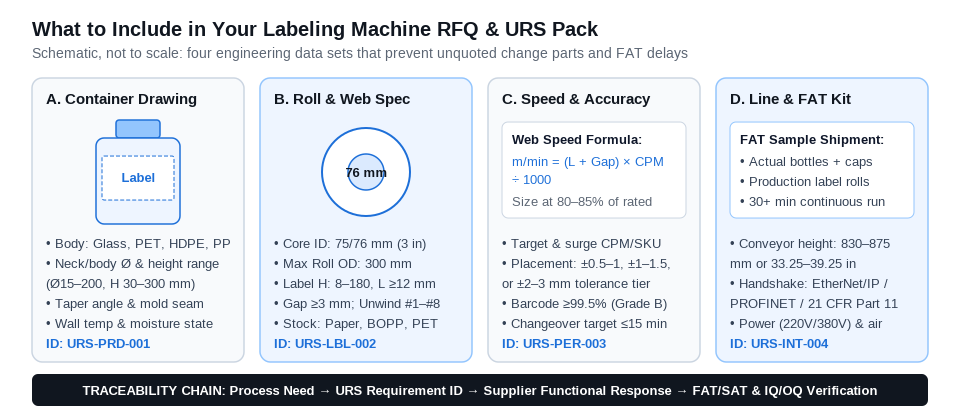
A labeling machine RFQ checklist is a structured engineering specification document that defines container geometry, label roll mechanics, sustained vs surge speeds, placement tolerances, and facility utilities for equipment suppliers. Issuing an incomplete Request for Quotation without roll unwind directions, wall temperatures, or sample shipment rules causes padded vendor contingency quotes, mismatched change parts, and costly Factory Acceptance Test (FAT) rework.
When sourcing industrial labeling machines, the buyer’s User Requirement Specification (URS) serves as the legal and technical baseline for Design Qualification (DQ), Factory Acceptance Testing (FAT), Site Acceptance Testing (SAT), and IQ/OQ/PQ validation. Use the copy-ready URS tables and engineering formulas below to assemble a complete inquiry package that allows any qualified OEM or line integrator to quote an exact, fixed-price machine configuration.
How a URS traces from RFQ to Factory Acceptance Testing
In pharmaceutical, food, beverage, personal care, and chemical packaging projects, a User Requirement Specification assigns a unique requirement ID to every operational constraint and maps it into a Requirements Traceability Matrix (RTM). Instead of vague requests such as “high-speed accurate bottle labeler,” an actionable URS separates mandatory requirements from optional preferences and defines how each requirement will be tested before shipment.
| URS Section Prefix | Engineering Scope | Required Buyer Attachments | Verification Gate (DQ / FAT / SAT) |
|---|---|---|---|
| URS-PRD (Product & Container) | Container material, dimensions (Ø15–200 mm, H 30–300 mm), wall stiffness, taper angle, surface temperature, and moisture state | 2D PDF dimensioned container drawings + 3D STEP files + 300–1,000 physical sample containers per SKU | Verified in Design Qualification (DQ) tooling drawings and 30-minute continuous FAT run |
| URS-LBL (Label & Roll Spec) | Facestock, adhesive, liner type, label width/length (H 8–180 mm), core ID (75–76 mm), max roll OD (300 mm), gap (≥3 mm), unwind #1–#8 | Die-line artwork PDF + converter spec sheet + 2–4 full production label rolls per SKU | Verified on unwind spindle, gap sensor, and peel plate (3–5 mm tip clearance) during FAT |
| URS-PER (Speed, Accuracy & Changeover) | Target sustained CPM, surge CPM, linear web speed (m/min), placement tolerance (±mm), changeover window (≤15 min) | SKU production matrix + shift schedule + OEE target calculation | Verified via 50-sample caliper measurement, speed-ramp test, and timed SMED swap at FAT |
| URS-INT (Line Interface, Vision & Utilities) | Conveyor height (830–875 mm or custom), flow hand (L→R/R→L), PLC protocol, vision/barcode grade (≥99.5%), power (V/Hz/kW), air | Plant floor plan CAD drawing + upstream/downstream equipment elevation sheet | Verified via challenge-sample reject tests at FAT and integrated line run at SAT |
| URS-DOC (Compliance, Spares & Schedule) | SUS 304/316L material certs, electrical schematics, 21 CFR Part 11 audit trail, 2-year spare-parts kit, lead-time milestones | Corporate electrical/safety standards + required delivery date (8–14 wk build + 2–6 wk transit) | Audited prior to shipment release and verified during Installation/Operational Qualification (IQ/OQ) |
Section 1: Container and product specification sheet (URS-PRD)
Container geometry and wall physics dictate whether your line needs a bottle labeling machine, a horizontal vial roller bed, or a shrink sleeve labeling machine. Copy the table below into your RFQ document and complete one column for each SKU (or attach a multi-SKU spreadsheet highlighting the smallest, largest, lightest, and most unstable containers).
| URS ID | Parameter | Engineering Input Required from Buyer | Example Specification Entry |
|---|---|---|---|
| URS-PRD-001 | Container Material & Surface Energy | Glass, PET, HDPE, LDPE, PP, aluminum, or coated carton; note if untreated polyolefin (<38 dynes/cm) | Clear PET bottle (high surface energy) for SKU A; natural HDPE jar (<38 dynes/cm, requires high-tack adhesive) for SKU B |
| URS-PRD-002 | Cross-Sectional Profile & Dimensions | Cylindrical diameter (Ø mm), or flat/oval/square width × depth × overall height (mm), plus wall thickness | Round bottle Ø65 mm × H 185 mm; Square oil bottle 72 × 72 × H 240 mm (inline range Ø15–200 mm, H 30–300 mm) |
| URS-PRD-003 | Sidewall Taper & Recessed Panel Geometry | Sidewall cone angle (degrees), recessed label panel depth (mm), and vertical lip clearances | Straight vertical wall (0° taper) with 0.8 mm recessed label panel (110 mm panel height) |
| URS-PRD-004 | Mold Seam, Handle & Orientation Feature | Specify if label must register relative to a bottle handle, mold parting line, embossed logo, or silkscreen | Align front and back panels 90° ± 1.5° from side mold seams |
| URS-PRD-005 | Filling State, Wall Temperature & Moisture | Filled & capped vs empty; product temperature at labeler (82–95 °C hot-fill, 1–7 °C cold-fill, -40 °C frozen, or ambient); dry vs wet | Filled and capped at ambient 22 °C; exterior wall blown dry after capper rinse |
Why empty vs filled container state matters
Always specify whether containers enter the labeler filled and capped or empty. Thin-walled PET water bottles and flexible HDPE squeeze bottles deform under wrap-belt pressure when empty unless the machine includes low-pressure sponge belts or internal inflation tooling. Similarly, never omit filling temperature: hot-fill products (82 to 95 °C) expand bottle walls and must pass through a cooling tunnel before pressure-sensitive labeling, while cold-fill products (1 to 7 °C) condense moisture that requires upstream air-knife drying and wet-strength adhesive.
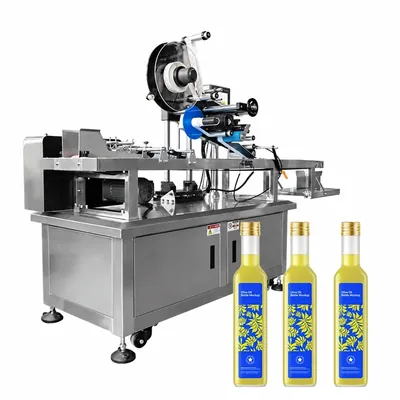
Section 2: Label construction, roll geometry, and unwind direction (URS-LBL)
Label web failures happen when the label converter winds rolls on the wrong core diameter, leaves an inconsistent inter-label gap, or reverses the unwind direction. Include this second table in both your equipment RFQ and your label printing purchase order.
| URS ID | Parameter | Engineering Input Required from Buyer | Example Specification Entry |
|---|---|---|---|
| URS-LBL-001 | Application Type & Label Count per Container | Wrap-around (full or partial), front & back, top, bottom, tamper-evident C-wrap, neck band, or full-body shrink sleeve | Twin-label application: 1 front panel label + 1 back ingredient label applied in a single pass |
| URS-LBL-002 | Facestock, Adhesive & Release Liner | Paper, white/clear BOPP, PE, PET, or PVC/PETG sleeve; permanent acrylic, high-tack rubber, wet-strength, or freezer adhesive; glassine (60–65 gsm) or PET liner | 50 µm clear BOPP facestock (requires capacitive gap sensor) with permanent emulsion acrylic adhesive on 30 µm clear PET liner |
| URS-LBL-003 | Label Dimensions & Die-Cut Tolerance | Label height / web width (mm), label length in web direction (mm), corner radius, and die-cut tolerance (±0.1 mm for 600+ CPM) | Front: H 95 mm × L 70 mm; Back: H 95 mm × L 85 mm (standard head range H 8–180 mm, L ≥12 mm) |
| URS-LBL-004 | Inter-Label Gap & Liner Side Margin | Gap between labels in web direction (mm) and exposed liner margin on top/bottom edges (mm) | 3.5 mm ± 0.2 mm inter-label gap (≥3 mm mandatory minimum); 1.5 mm liner backing margin on each edge |
| URS-LBL-005 | Roll Core ID & Maximum Roll OD | Inner core diameter (75–76 mm / 3 in industrial standard) and maximum outer roll diameter (300 mm standard) | 76 mm (3 in) heavy-wall cardboard/plastic core; 300 mm max outer roll diameter |
| URS-LBL-006 | Roll Unwind Direction (#1 to #8) | Specify exact chart number (#1–#4 outside wound, #5–#8 inside wound) per label roll unwind chart | Front head: Unwind #3 (outside wound, right edge leading); Back head: Unwind #4 (outside wound, left edge leading) |
Section 3: Speed ratings, web velocity math, and placement tolerances (URS-PER)
Never specify a single number like “150 BPM” without distinguishing between upstream filler speed, surge catch-up speed, and machine nameplate capacity. Because real-world labeling output runs at 70% to 90% of nameplate speed, your URS should require the manufacturer to size the machine so your sustained target speed sits at 80% to 85% of rated capacity.
Pre-RFQ sizing formulas to include in your URS
Include these three equations directly in your URS-PER performance section so all bidding manufacturers calculate speed and web velocity on the same basis:
- Minimum Nameplate Speed Rating: CPM_rated_min = CPM_target_sustained / 0.80
- Required Surge Speed (with upstream accumulation buffer): CPM_surge = CPM_target_sustained × 1.20
- Required Servo Web Dispensing Speed (m/min): v_web (m/min) = ((L_label + L_gap) × CPM_surge) / 1000
Worked URS calculation: If your line runs a sustained filler rate of CPM_target_sustained = 160 BPM with a 120 mm label length and a 4 mm gap (124 mm repeat pitch):
- Specify a minimum machine nameplate rating of CPM_rated_min = 160 / 0.80 = 200 BPM.
- Specify a surge catch-up rate of CPM_surge = 160 × 1.20 = 192 BPM.
- Specify a minimum continuous servo web dispensing velocity of v_web = (124 × 192) / 1000 = 23.81 m/min (require a closed-loop servo head rated for at least 35 to 50 m/min so the motor operates with generous torque headroom).
| URS ID | Parameter | Engineering Input Required from Buyer | Example Specification Entry |
|---|---|---|---|
| URS-PER-001 | Sustained Target Speed & Surge CPM | Nominal continuous line speed (CPM), surge recovery speed (CPM), and nameplate derating basis (80%–85%) | 160 BPM sustained target; 192 BPM surge catch-up; machine nameplate rated ≥200 BPM |
| URS-PER-002 | Applicator Drive & Mechanical Tolerances | Closed-loop servo (±0.01 mm, <1 ms response) vs stepper; peel-plate clearance (3–5 mm); roller TIR (<0.005 in) | Brushless closed-loop servo drive with conveyor encoder velocity following; peel tip 3–5 mm; roller TIR <0.005 in; bottle skew <2° |
| URS-PER-003 | Placement Accuracy Tolerance Tier | Ultra-precision (±0.5–1 mm), High-accuracy retail (±1–1.5 mm), or Standard industrial (±2–3 mm) | High-accuracy tier: vertical height and horizontal centering within ±1.0 mm across 99.5% of containers |
| URS-PER-004 | SMED Changeover Time Target | Maximum time (minutes) for one technician to swap between any two defined SKUs using tool-free parts | Complete SKU changeover in ≤15 minutes (last good bottle of SKU A to first verified bottle of SKU B) using digital counters and HMI presets |
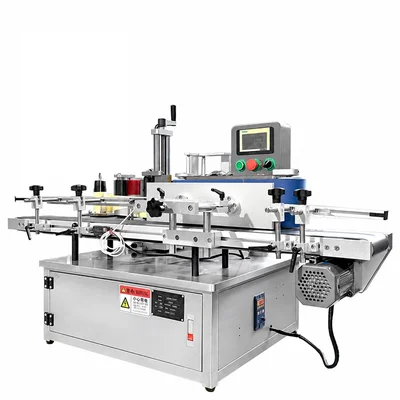
Section 4: Line integration, coding, vision, and facility utilities (URS-INT)
To prevent costly field modifications when the machine arrives on your loading dock, lock the physical conveyor handoffs, PLC communication protocol, vision inspection rules, and utility drops in URS-INT. For deeper engineering context on accumulation buffers and fieldbus handshakes, see our custom labeling line integration guide.
| URS ID | Parameter | Engineering Input Required from Buyer | Example Specification Entry |
|---|---|---|---|
| URS-INT-001 | Line Flow Hand, Elevation & Footprint | Left-to-Right (L→R) or Right-to-Left (R→L) viewed from operator side; top-of-chain conveyor height (mm/in); max floor space | Left-to-Right (L→R) flow; conveyor elevation 860 mm ± 25 mm (standard 830–875 mm or 33.25–39.25 in); footprint within 2500 × 1600 mm |
| URS-INT-002 | Conveyor & Accumulation Interface | Standalone integral conveyor vs pass-through chain; dead-plate transfer; upstream rotary accumulation table (0–8 RPM, ≤300 lb) | Integral 304 SS conveyor with 114.3 mm (4.5 in) Delrin flat-top chain, dead-plate transfers, and high/low accumulation photoeyes |
| URS-INT-003 | Lot/Date Coding & Vision / Barcode Gate | TTO, CIJ, or laser coder; camera frame rate (100–1,000+ fps); barcode standard (ISO/IEC 15417:2007 Code 128); reject bin | Integrated TTO ribbon coder + 300 fps camera verifying presence, skew, OCR lot/expiry, and ISO/IEC 15417 barcode read rate ≥99.5% with locked reject bin |
| URS-INT-004 | PLC/HMI Platform & Control Bus | Preferred PLC brand; hardwired 24V DC dry contacts, Modbus (10–50 ms), EtherNet/IP (1 ms), or PROFINET IRT (<1 ms, <1 µs jitter); 21 CFR Part 11 | Siemens or Allen-Bradley PLC with color touchscreen HMI, EtherNet/IP synchronization, and optional 21 CFR Part 11 audit trail |
| URS-INT-005 | Electrical, Pneumatic & Steam Utilities | Plant voltage/phase/frequency (220V 1Ph or 380V/480V 3Ph, 50/60 Hz), kW allocation (0.3–2.5 kW unit; 10–50+ kW line), dry air (MPa/CFM), steam | 220V AC Single Phase, 50/60 Hz, 1.5 kW (or 380V 3-Phase); clean dry compressed air at 0.5 MPa (72 PSI) |
Section 5: Sample shipment rules, FAT criteria, and project schedule (URS-DOC)
A written URS only protects your timeline if the manufacturer tests the completed machine on your actual containers and label rolls before crating. Executing a formal FAT and SAT against your URS baseline increases effective line throughput by up to 30% and cuts labeling downtime by 50%.
Include these five commercial and verification rules in the final section of your RFQ:
- Lead-time milestone schedule: Require the vendor to quote exact calendar weeks for engineering drawing approval, manufacturing and assembly (8 to 14 weeks standard; 5 to 7 weeks expedited), FAT execution, ocean or air shipping (2 to 6 weeks), and any country-specific certification (2 to 4 weeks).
- FAT sample shipment quantities: Specify that 3 to 4 weeks prior to FAT, the buyer will ship 300 to 1,000 capped production containers and 2 to 4 full production label rolls per SKU (76 mm core, ≤300 mm OD) to the manufacturer’s test floor.
- Mandatory 30-minute continuous FAT endurance & challenge test: Release of the final pre-shipment payment requires a witnessed (in-person or live multi-angle video) 30+ minute continuous run at target and surge CPM with zero web breaks, caliper verification of 50 consecutive containers within URS-PER-003 tolerance, a 100% positive diversion of deliberate fault-challenge bottles into the locked reject bin, and a timed ≤15-minute SMED changeover between SKUs.
- Two-year critical spare-parts kit: Require an itemized quote for a two-year wear-parts kit shipped inside the machine crate (drive and nip rollers, sponge wrap belts, top hold-down belts, Teflon peel-edge strips, vacuum pads, and a spare gap/product sensor), backed by a 12-month warranty and 5 to 7 working day air-freight dispatch for emergency spares.
- Documentation and validation deliverables: Require English PDF and printed binders containing point-to-point wire-numbered electrical schematics, pneumatic diagrams, mechanical assembly drawings, OEM component BOMs, unencrypted PLC/HMI parameter backups, SUS 304/316L material certificates, and (where required) full DQ/FAT/SAT/IQ/OQ/PQ validation protocols.
Before sending your completed checklist, run your target rate through our labeling speed (BPM) and web pitch calculator, review our 7-gate guide on how to choose a labeling machine to double-check your machine family, benchmark capital budgets in our industrial labeling machine cost guide, check our labeling machine manufacturer qualification guide and FAT and troubleshooting manual, and send your completed URS parameters directly to LINEVO engineers on WhatsApp.
Common questions
What is the most common mistake engineers make in a labeling machine RFQ?
The most common mistake is specifying only bottle diameter and target bottles per minute while omitting label roll unwind direction (#1 to #8), label length (which dictates servo web speed in meters per minute), and container wall temperature or moisture state at the moment of labeling. Including a complete URS-PRD and URS-LBL table prevents unquoted sensor upgrades and changeover delays.
Why does my RFQ need to specify both sustained CPM and surge CPM?
In an integrated packaging line, the labeler must periodically pause for 30 to 60 seconds to splice a new label roll while the upstream accumulation table buffers incoming bottles from the filler. Specifying a surge CPM (typically 20% to 25% above the filler rate) and sizing the labeler so sustained demand sits at 80% to 85% of nameplate capacity ensures the labeler can drain the accumulation buffer smoothly after restarting.
What roll core and outer diameter should I specify to my label printer?
Specify a 75 to 76 mm (3-inch) inner core diameter, a maximum 300 mm outer roll diameter, and a minimum 3 mm inter-label gap along the web. These dimensions match standard industrial unwind spindles and gap sensors across wrap-around, front-and-back, and print-and-apply labeling machines.
When should I send physical sample bottles and label rolls to the manufacturer?
Send initial sample containers and label die-lines during final quotation review so the manufacturer can confirm applicator head geometry and quote exact change-part pricing, then ship 300 to 1,000 production containers and 2 to 4 full production label rolls per SKU at least three weeks before the scheduled Factory Acceptance Test (FAT).
Related Guides & Specifications
Industrial Labeling Machine Price and Total Cost of Ownership Guide
Transparent industrial labeling machine price breakdown from $2,000 semi-automatics to $500,000+ high-speed lines, plus hidden TCO drivers and payback math.
Learn moreHow to Choose an Industrial Labeling Machine: 7-Gate Selection Guide
Step-by-step labeling machine buying guide: 7 engineering gates from container geometry, surface energy, and unwind #1-#8 to speed headroom and line utilities.
Learn moreClear Label Sensor Selection: Capacitive vs Ultrasonic vs Optical
Engineering guide to clear label sensors on BOPP and PET films: why optical slot sensors drop to 68% and ultrasonic to 12% vs 100% capacitive accuracy at 220 m/min.
Learn moreHow to Fix Label Wrinkling, Bubbling, Flagging, and Axial Skew
Engineering troubleshooting guide to fix pressure-sensitive label wrinkling, air bubbling, edge flagging, and axial skew across bottle and carton labelers.
Learn moreRelated Equipment & Guides
Automatic Labeling Machines: How to Choose by Container, Label and Speed
Choose an automatic labeling machine by container shape, label type and speed. Compare labeler types, accuracy tiers and the checks to run on your samples.
Learn moreLabel Applicators & Print-and-Apply Systems: Actuation, Speed & Retrofit Guide
Compare pre-printed label applicators and print-and-apply systems across wipe-on, tamp-blow, air-blow, and corner-wrap actuation, web speed, and retrofits.
Learn moreWrap-Around and Pressure-Sensitive Labeling Machines: Web Kinematics & Line Selection
Engineering guide to wrap-around and pressure-sensitive labeling machines: web tension, peel plate geometry, wrap belt vs 3-roller kinematics, and line selection.
Learn moreShrink Sleeve Labeling Machines: How to Match Applicator, Film and Shrink Tunnel
Specify a shrink sleeve labeling machine by sleeve format, layflat width, film shrink ratio and steam or electric tunnel. Compare speeds and sample test steps.
Learn morePrint and Apply Labeling Systems: Thermal Engines, DPI, and PLC Integration
Select print and apply labeling machines across Zebra, Sato, and Datamax engines, 203 to 600 DPI printheads, EtherNet/IP handshakes, and ISO/IEC 15416 grading.
Learn moreBottle Labeling Machines: How to Choose by Container Material, Shape, and Line Speed
Select a bottle labeling machine by container material (glass, PET, HDPE), shape (round, flat, oval, square, tapered), surface condensation, and line speed.
Learn moreLabel Automation and Custom Packaging Line Labeling Integration
Engineering guide to label automation and inline labeling system integration across fillers, cappers, accumulation tables, PLC sync, and vision reject gates.
Learn moreHow to Qualify an Industrial Labeling Machine Manufacturer
How to evaluate an industrial labeling machine manufacturer: OEM vs integrator comparison, mechanical build audit, servo vs stepper drives, and FAT checklist.
Learn moreLabel Roll Unwind Direction Chart (#1 to #8) and Roll Length Calculator
Interactive #1 to #8 label winding direction chart (wound out vs wound in), eye-mark guide, and roll length, OD, core size, and shift roll calculator.
Learn moreLabeling Speed (BPM), OEE Surge Capacity, and Web Pitch Calculator
Calculate required labeling machine surge BPM, line OEE headroom, label web dispensing velocity in m/min, container pitch, and matched conveyor speed.
Learn moreIndustrial Labeling Machine FAT Checklist, Maintenance, and Troubleshooting Manual
Execute a 30-minute Factory Acceptance Test (FAT), follow a 6-tier preventive maintenance schedule, and resolve 12 common labeling machine defects.
Learn moreIndustrial Labeling Machine Price and Total Cost of Ownership Guide
Transparent industrial labeling machine price breakdown from $2,000 semi-automatics to $500,000+ high-speed lines, plus hidden TCO drivers and payback math.
Learn moreHow to Choose an Industrial Labeling Machine: 7-Gate Selection Guide
Step-by-step labeling machine buying guide: 7 engineering gates from container geometry, surface energy, and unwind #1-#8 to speed headroom and line utilities.
Learn more